Nitrile vs Latex Gloves: How to Choose Between Nitrile, Latex and Vinyl
No - nitrile is not the same as latex. Nitrile gloves are made from synthetic rubber; latex gloves are made from natural rubber. That one difference drives everything else buyers ask us about: allergy, strength, chemical resistance, feel and cost. This guide compares nitrile vs latex gloves point by point, with vinyl alongside, so you can choose the right material for food service, cleaning and industrial work.
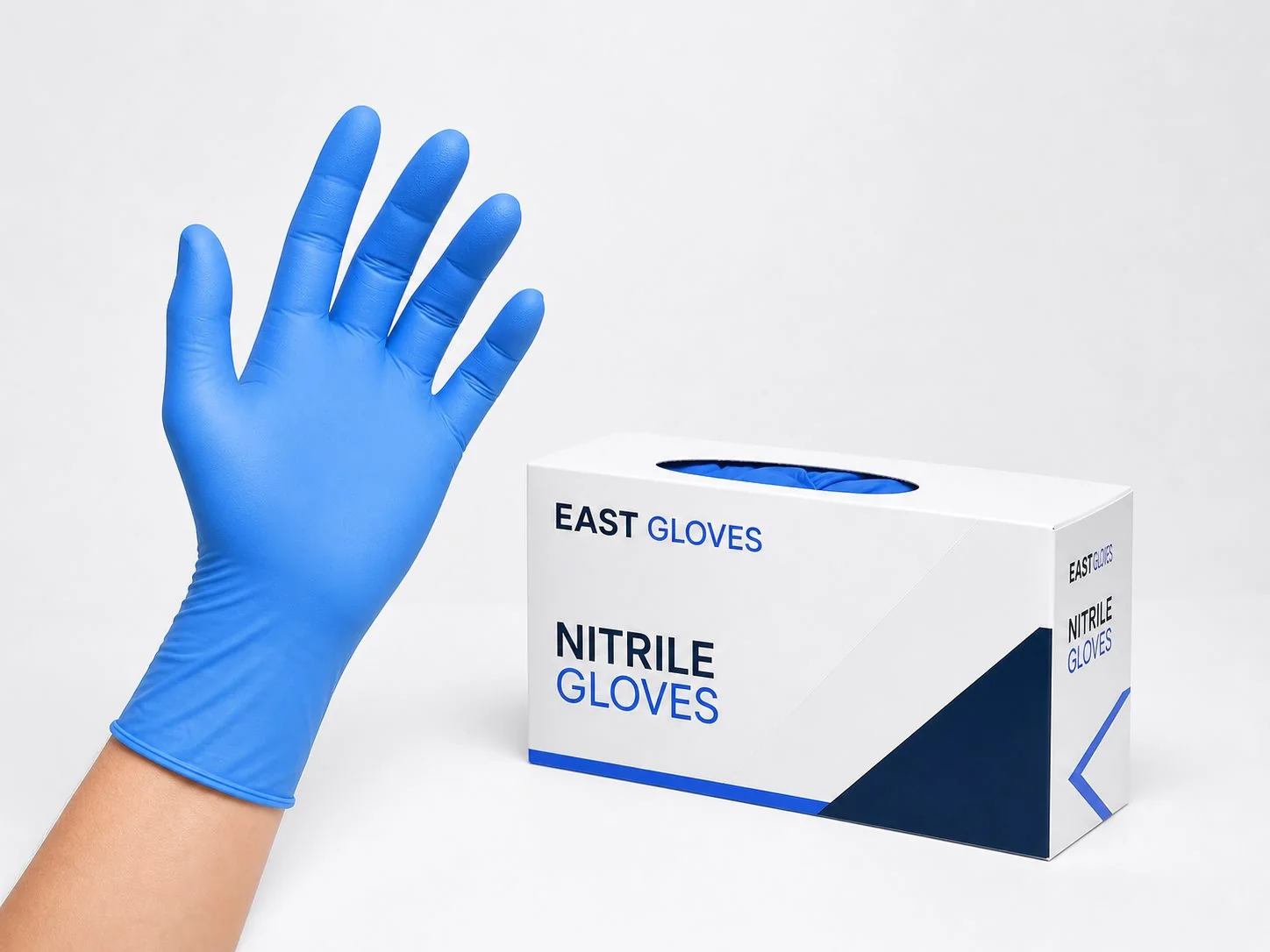
Is nitrile the same as latex? The short answer
No. Nitrile and latex are two different materials that happen to be made into the same shape. Nitrile gloves are made from synthetic rubber - a copolymer of acrylonitrile and butadiene, produced from petrochemical feedstock. Latex gloves are made from natural rubber, the sap of the rubber tree. Nitrile contains no natural rubber latex proteins at all; latex gloves contain the proteins that cause latex allergy.
Because the base material differs, the two gloves behave differently in the four ways buyers ask us about most: allergy profile, puncture and chemical resistance, elasticity and feel, and what drives their cost. Neither material is better in the abstract. Nitrile is the safer default for a mixed workplace, because it removes the allergy question entirely. Latex still wins on fit and fine touch where every wearer can use it. Vinyl, the third material in this guide, sits alongside both as the option for short tasks and very frequent changes. The sections below compare nitrile vs latex gloves point by point, then cover each material in depth.
Comparing nitrile and latex for a bulk order?
Tell us the task, the sizes and the destination country, and we will quote the material that fits - or a mixed container of both.
Quick comparison table
| Feature | Nitrile | Latex | Vinyl |
|---|---|---|---|
| Material | Synthetic rubber | Natural rubber | PVC |
| Latex-free | Yes | No | Yes |
| Latex allergy risk | None from the glove material | Yes - natural rubber proteins | None |
| Puncture resistance | High | Medium | Low |
| Chemical resistance | Widest of the three | Good with water-based liquids; weaker with oils | Limited |
| Elasticity and fit | Good | Excellent - closest fit | Low - looser fit |
| Tactile sensitivity | Good; best in lighter grades | Excellent | Fair |
| Weight grade, size M | 3.0 g | 5.0 g | 4.0 g |
| Powder-free | Standard | Standard; powdered is the older form | Standard |
| Best for | Food handling, cleaning, industrial, examination and laboratory work | Fine work, beauty, examination where allergy is managed | Short food-service tasks, frequent changes |
| Cost position | Higher per glove, lasts longer | Mid; follows natural rubber prices | Lowest per glove, changed most often |
Still deciding between nitrile and latex?
Message Amy on WhatsApp - +86 138 5785 4761 - with your task and rough quantity. We will tell you which material fits, including when the honest answer is the cheaper one.
Nitrile vs latex gloves, point by point
Raw material and the allergy question
This is the difference everything else follows from. A nitrile glove is synthetic from start to finish: no natural rubber, no latex proteins, nothing for a latex-allergic wearer to react to. Our nitrile is also accelerator-free - it is made without the chemical accelerators that are the other common cause of skin complaints about disposable gloves - so the two most frequent wearer problems are both designed out. A latex glove is natural rubber, and a share of wearers react to its proteins. Once a workplace issues latex, someone has to track who can wear it and who cannot, keep an alternative at hand, and manage the exceptions. That management burden, more than any performance gap, is the main reason buyers have moved their standard issue from latex to nitrile over the past decade.
Strength, puncture and tear behaviour
Nitrile has the highest puncture resistance of the three materials in this guide, which is why it is the default where a torn glove means a failed task - work with sharp tools, glass, wire or rough surfaces. Latex stretches further before it breaks and pulls back like a rubber band, so it resists tearing by stretching and gripping; it is the harder glove to pull apart, but the easier one to puncture. Vinyl is the weakest of the three on both counts and is not chosen for protection-critical work. In practice: sharp or abrasive work points to nitrile, work that stretches and pulls the glove points to latex, and neither points to vinyl.
Chemical resistance
Nitrile resists the widest range of chemicals of the three - oils, greases, fuels, detergents and many solvents - which is why cleaning, automotive and industrial buyers standardise on it. Latex handles water-based liquids well, including many cleaning solutions and the fluids of examination work, but it degrades faster in contact with oils and a range of organic solvents. Vinyl's chemical resistance is the most limited. No glove resists everything, so the correct procedure is always substance by substance: name the chemicals your team handles, and ask for the test report matched to the exact material you are buying. A report issued for nitrile says nothing about latex, and the document you receive should name the product on your order.
Fit, feel and tactile sensitivity
Latex is still the benchmark for feel: it fits closest, stretches most, and gives the wearer the finest touch - the reason it remains first choice for detailed work where every wearer can use it. Nitrile has closed most of that gap in its lighter grades: a 3.0 g nitrile glove in the wearer's size gives good sensitivity for food preparation, laboratory handling and assembly, without the allergy question. Vinyl fits loosest and feels least precise, which matters little for a two-minute task and a great deal for a two-hour one. If your team is switching from latex to nitrile for allergy reasons, order the lighter nitrile grades first - the feel difference your wearers notice will be smallest there.
Thickness and weight grades
Weight is how disposable gloves are graded, and the grade is only meaningful with its reference size. Our nitrile ladder runs S 2.5 g, M 3.0 g, L 3.5 g, XL 4.0 g per glove. Our latex ladder runs S 4.5 g, M 5.0 g, L 5.5 g, XL 6.0 g. A latex glove is heavier than a nitrile glove at the same size; that reflects the material and its formulation, not extra strength, so never compare weights across materials as if the heavier glove were the stronger one. Thickness is the second figure buyers specify: standard examination-grade gloves measure about 0.10 mm at the palm and 0.11 mm at the fingertip as single-wall minimums, in the standard lengths of 240 mm (9 inch) and 300 mm (12 inch), with palm widths of S 80, M 95, L 110 and XL 120 mm, each plus or minus 10 mm. Our glove weight check guide shows how to verify a grade on arrival with a 0.01 g scale, and our nitrile gloves vs latex gloves difference article works through the same comparison from the test data side.
Powder-free or powdered
Both nitrile and latex are now bought powder-free as the standard. Powdered gloves - historically mostly latex - used a dusting of powder to make donning easier, but the powder also carries latex proteins into the air when gloves are snapped on and off, which is one more reason workplaces moved away from powdered latex. Our standard supply for both nitrile and latex is powder-free, in every size and grade on this page.
What drives the cost difference
Latex pricing follows a farm product: natural rubber moves with harvests, weather and tapping seasons. Nitrile pricing follows petrochemical feedstock - butadiene and acrylonitrile. The two price chains move on different triggers, so the gap between nitrile and latex widens and narrows over time rather than staying fixed. Both materials have been rising in price, by different amounts at different times; we hold inventory of our core grades, which buffers short-term moves for regular orders. Per glove, vinyl is the lowest of the three and nitrile is usually the highest at a comparable grade - but as the cost-effectiveness section below shows, per-glove price is the wrong number to decide on.
Nitrile in depth: strength, feel and weight
Nitrile gloves are made from synthetic rubber. They are latex-free, so they suit workplaces where latex allergy is a concern, and they offer the highest puncture resistance of the three materials - the reason they are the default choice where a torn glove means a failed task, from cleaning with chemicals to food preparation with sharp tools. Our nitrile gloves are accelerator-free, which matters for wearers with sensitive skin and for anyone wearing gloves for a full shift: accelerators are the chemicals most often behind skin reactions to disposable gloves, and removing them removes a common cause of complaints.
Weight is how nitrile gloves are graded. Our nitrile range runs from 2.5 g per glove in size S to 4.0 g in size XL, and the grade is always quoted with its reference size - a "4 g" figure means little until you know whether it was measured on a size M or a size L glove. Lighter grades give better feel for fine work and frequent changes; heavier grades last longer through a shift and resist tearing better. Thickness, measured in mil at the palm or fingertip, is a second figure worth asking for, but weight is the more reliable comparison: a glove can be thick at the palm and thin at the cuff, while weight covers the whole glove. Our glove weight check guide explains how to verify the grade on arrival with a 0.01 g scale. For chemical work, ask about chemical resistance for the specific substances your team handles - nitrile resists a wider range of chemicals than vinyl, but no single glove resists everything, and the right answer is always substance by substance. See our nitrile gloves page for the range we make.
Latex in depth: comfort with an allergy limit
Latex gloves are made from natural rubber, and they remain the most comfortable disposable glove to wear: excellent elasticity, a close fit that follows the hand, and the best tactile sensitivity of the three materials. For fine work - beauty treatments, detailed assembly, work where the wearer must feel what their fingers are doing - latex is hard to beat. The limit is allergy. Natural rubber latex causes allergic reactions in a real share of wearers, and a workplace that issues latex gloves must know who can wear them and who cannot. That is the main reason many buyers have moved their standard issue to nitrile while keeping latex for specific tasks where feel matters most.
Our latex gloves run from 4.5 g per glove in size S to 6.0 g in size XL, and the full surface is textured for grip. One practical point about documents: certification coverage differs by material, so always ask for the certificate matched to the exact material you are buying, and check the scope printed on the document itself. A certificate that covers one material does not automatically cover another. The same rule applies to test reports for food contact and chemical resistance - they are issued per material and per product, and the document you receive should name the product on your order. See our latex gloves page for sizes and packing.
Vinyl in depth: short tasks and frequent changes
Vinyl gloves are made from PVC - polyvinyl chloride - not from rubber of any kind. That distinction matters, because PVC behaves differently from both nitrile and latex: it is looser-fitting, less elastic, and less resistant to puncture and chemicals, but it is also the most cost-effective of the three materials for short-duration tasks. A food-service worker who changes gloves every few minutes, a cleaner moving between rooms, or a production line where gloves are changed at every break will use vinyl well: the glove is comfortable enough for a short wear, cheap enough to change often, and easy to put on and take off quickly.
Vinyl gloves are heavier per glove than nitrile at a similar feel, because PVC is denser - our vinyl range runs from 3.5 g per glove in size S to 5.0 g in size XL - so do not compare weights across materials as if a heavier vinyl glove were a stronger one. Judge vinyl on its own terms: fit, comfort over a short wear, and how often the task requires a fresh pair. Our vinyl food-handling guide and the blue vinyl wholesale guide cover the food-service case in detail, and the nitrile vs vinyl comparison works through the cost-effectiveness question - the cost of the glove against the cost of changing it - without prices, because the right comparison is cost per task, not cost per box. See our vinyl gloves page for the range.
How to choose by task
Material choice follows the task, not the other way round. Use this table as a starting point, then check the specific requirements of your workplace - the chemicals handled, the length of a shift, and whether any wearer has a latex allergy.
| Task | First choice | Why |
|---|---|---|
| Food preparation and handling | Nitrile or vinyl | Both suit food contact; nitrile for longer wear and sharper work, vinyl for short tasks and frequent changes. |
| Cleaning and janitorial work | Nitrile | Higher puncture resistance and wider chemical resistance for detergents and cleaning agents. |
| Beauty, tattoo and hair work | Nitrile or latex | Nitrile where latex allergy is a concern; latex where the finest touch matters and all wearers can use it. |
| Industrial and automotive work | Nitrile | Strength and chemical resistance for oils, solvents and rough handling. |
| Examination and laboratory work | Nitrile | Latex-free, with good tactile sensitivity in lighter grades; agree the inspection level for the order. |
| Light, short-duration tasks | Vinyl | Most cost-effective where gloves are changed every few minutes. |
When the task list is mixed, the usual answer is a mixed order: nitrile for the heavy tasks, vinyl for the short ones, in one container up to the 1,000-carton minimum. Each material is loaded in its own marked block and counted separately on the packing list, and production typically runs about 30 days after order confirmation.
Cost-effectiveness: what actually drives the difference
Buyers often ask which material is cheapest. The honest answer is that the glove's unit cost is only one part of the cost of a task. Three things drive the real difference: the material itself, the weight grade, and how often the glove must be changed. Vinyl costs less per glove, so it wins where gloves are changed every few minutes. Nitrile costs more per glove but lasts longer through a shift and tears less often, so it wins where a torn glove stops work or where one pair must last an hour. Latex sits between the two on durability, with the best feel, and its cost must be weighed against the allergy management it requires.
Put another way, the right comparison is cost per task, not cost per box. Count how many gloves a worker uses in a shift, how many tears or changes interrupt the work, and how long a pair lasts before it must be replaced. A cheaper glove that is changed twice as often is not the cheaper glove. That comparison needs no price list - it needs the task, the change frequency and the failure rate, all of which a buyer can measure in their own workplace before ordering.
Ordering nitrile or latex gloves from our factory
We are Ningbo East Packaging Technology Co., Ltd. - EASTGLOVES - and we have made disposable gloves in Ningbo since 1993, with daily output of up to 900,000 pairs across our nitrile, vinyl and latex lines. When you order from us, you are specifying against the grades on this page: the weight ladders, sizes and documents are agreed in writing before production, and the weight check method above is exactly how our own QC weighs finished gloves.
The minimum order is 1,000 cartons (100 gloves per box, 10 boxes per carton), and materials, colours and sizes can be mixed in a single container. Private label and custom logo boxes are available; custom packaging is free on orders of 1,000 cartons and above, and our standard box is included at any order size. Samples are available before a bulk order, with the sample and courier fees deductible from your first bulk order. Production lead time is typically about 30 days after order confirmation, FOB Ningbo, and the CE, ISO 13485 and Saudi MDMA documentation is matched to the material on your order.
Material Comparison FAQ
Is nitrile the same as latex?
No. Nitrile is a synthetic rubber made from acrylonitrile and butadiene; latex is natural rubber from rubber trees. Nitrile contains no natural rubber latex proteins, so it avoids latex allergy; latex is more elastic and gives the closest fit and the finest touch. The two also differ in chemical resistance and in what drives their cost, which is why buyers choose by task rather than treating them as interchangeable.
What is the difference between nitrile and latex gloves?
Nitrile is synthetic rubber, latex-free and more puncture-resistant; latex is natural rubber, more elastic, with the best tactile sensitivity. The main reason buyers choose nitrile over latex is latex allergy: a workplace issuing latex must know who can wear it and who cannot.
Which is better, nitrile or vinyl gloves?
It depends on the task. Nitrile is stronger, more puncture-resistant and more chemically resistant, and suits longer wear. Vinyl is more cost-effective for short tasks with frequent changes. For food preparation, either works; for cleaning and industrial work, nitrile is usually the better choice.
Are vinyl gloves made from synthetic rubber?
No. Vinyl gloves are made from PVC - polyvinyl chloride. Nitrile gloves are made from synthetic rubber, and latex gloves from natural rubber. The materials behave differently, so compare them on fit, puncture resistance and chemical resistance, not on weight alone.
Which gloves should a workplace with latex allergy choose?
Nitrile or vinyl - both are made without natural rubber latex. Nitrile is the closer substitute for latex in strength and feel, and our nitrile is accelerator-free, which removes the other common cause of skin reactions to disposable gloves. Vinyl suits short tasks with frequent changes. If some staff still use latex for fine work, keep the two materials clearly separated and labelled.
Are nitrile gloves more expensive than latex gloves?
Per glove, nitrile usually costs more than latex at a comparable grade, and vinyl costs the least of the three - but the per-glove figure is not the whole cost. Latex pricing follows natural rubber harvests and nitrile follows petrochemical feedstock, and both have been rising by different amounts. What decides the real cost is how long a pair lasts and how often it is changed: count cost per task, not cost per box, and ask us to quote both materials against the same task if you are switching.
What does accelerator-free mean for nitrile gloves?
It means the gloves are made without the chemical accelerators most often behind skin reactions to disposable gloves. Our nitrile gloves are accelerator-free, which suits wearers with sensitive skin and anyone wearing gloves for a full shift. Read the accelerator-free nitrile guide for the full explanation.
Can I mix nitrile, vinyl and latex in one order?
Yes. Mixed orders are routine: several materials, colours and sizes in a single container, up to the 1,000-carton minimum order. Each material is loaded in its own marked block and counted separately on the packing list, and the documents are matched to each material.
How do I check the weight grade of the gloves I receive?
Weigh them. Use a digital scale that reads to 0.01 g, weigh at least ten gloves of the agreed reference size from different cartons, and compare the average with the agreed specification for that size. Our glove weight check guide explains the method step by step.
Need help choosing the right glove?
Send Amy your product type, size, color, quantity, destination country and OEM packaging requirements. Contact Amy on WhatsApp for a prompt response.