Nitrile vs Vinyl Gloves: Which Disposable Glove Should Importers Buy?
A practical B2B comparison of nitrile and vinyl gloves for distributors, food service buyers, cleaning companies and PPE importers.
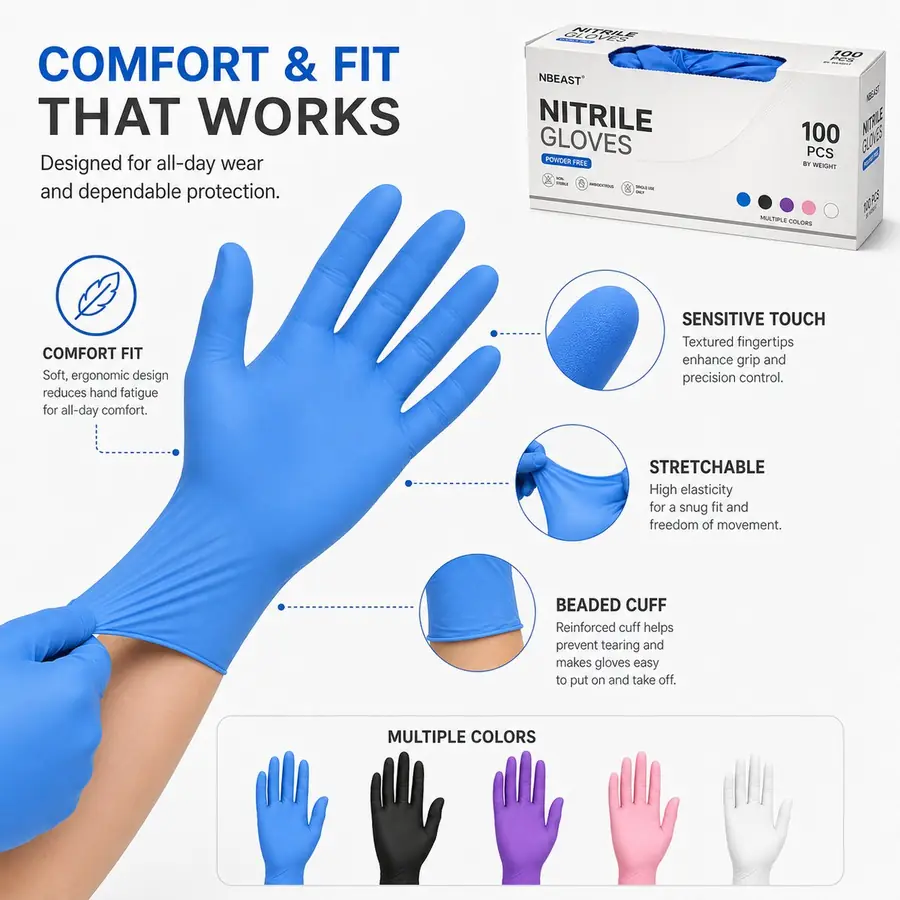
Quick Answer for B2B Buyers
Nitrile gloves are usually the safer choice when buyers need stronger puncture resistance, better chemical splash protection, a latex-free fit and a more premium user experience. Vinyl gloves are usually chosen when the main requirement is low cost, frequent glove changes and short-duration tasks such as food preparation, supermarket counters, catering, light cleaning and beauty service support. For importers and distributors, the right decision is not simply nitrile or vinyl; it is matching the glove material to the user scenario, target price, carton quantity and customer expectation.
Material Difference
Nitrile gloves are made from synthetic rubber. They are latex-free and normally offer better stretch, better hand feel and stronger resistance than vinyl. Vinyl gloves are made from PVC and plasticizer. They are also latex-free, but they usually fit looser and are more suitable for low-risk applications. If a buyer is supplying medical examination, industrial cleaning, automotive maintenance or users who complain about tearing, nitrile should be the main recommendation. If a buyer is supplying restaurants, food counters, bakeries, hotels or general hygiene programs where gloves are changed often, vinyl can still be a very competitive product.
Nitrile vs Vinyl Gloves Comparison Table
| Factor | Nitrile Gloves | Vinyl Gloves | B2B Buying Note |
|---|---|---|---|
| Material | Synthetic rubber, latex-free | PVC, latex-free | Both can serve latex-sensitive users, but hand feel is different. |
| Strength | Usually stronger with better puncture resistance | Best for light-duty and short-duration tasks | Choose nitrile for cleaning, beauty and industrial users with tear complaints. |
| Fit | Closer fit and better stretch | Looser fit and easier quick changes | Food service buyers often accept vinyl for frequent glove changes. |
| Cost | Higher unit price, better premium positioning | Lower unit price, strong for price-sensitive accounts | Many distributors carry both to cover different customer segments. |
| Common Colors | Blue, black, white, pink, purple, diamond texture colors | Clear, blue, black | Color choice affects retail presentation and user acceptance. |
| Best Applications | Cleaning, beauty, examination, automotive, industrial, premium food handling | Food service, catering, supermarkets, hospitality, light cleaning | Match the glove to task risk and expected wear time. |
Applications
Nitrile gloves are commonly used in medical examination, dental clinics, beauty salons, tattoo studios, laboratories, cleaning businesses, light industrial work, automotive repair and household chemical handling. Vinyl gloves are commonly used in food service, catering, deli counters, supermarkets, hospitality, packing lines and quick cleaning tasks. Buyers should not oversell vinyl into heavy-duty work, and they should not force nitrile into every low-price food service tender if the end customer is mainly checking cost per box.
Cost and Margin
Vinyl normally gives buyers a lower entry price. This is helpful when selling to accounts that compare price every week. Nitrile costs more, but it can create better margin because it is easier to position as a stronger, more comfortable and more professional product. A smart distributor can carry both: vinyl for price-sensitive accounts and nitrile for premium accounts, compliance-driven users or customers with higher breakage complaints.
Specification Checklist
Before ordering, confirm size range, color, powder-free requirement, glove weight, box quantity, carton packing, inner box design, barcode, carton marks and target application. For nitrile, common buyer questions include thickness, texture, cuff strength, tensile performance and color availability such as blue, black, white, pink, purple or diamond texture options. For vinyl, buyers usually focus on food contact use, powder-free status, clear or blue color, cost per box and carton quantity.
How EASTGLOVES Helps
EASTGLOVES supports direct disposable glove sourcing from Ningbo with MOQ 100 boxes, free samples before bulk order, FOB Ningbo shipping support and OEM packaging discussion. Buyers can send target market, product use, size mix, quantity and packing requirements to receive a practical quotation instead of a generic price list.
Practical selection questions from glove users and buyers
Is “food safe” enough to choose a glove?
No. For nitrile and vinyl comparison, begin with wear time, tear risk, dexterity and cost per completed task; then verify the destination-market claim for the exact SKU. A short service task may need a different glove from long food-processing work.
When is vinyl or TPE more economical than nitrile?
Vinyl and TPE can suit short, low-risk tasks with frequent changes. Nitrile is usually chosen when fit, durability or longer wear matters. Cost the nitrile and vinyl comparison option using actual changes, rejected gloves and task completion—not the box price alone.
What should a workplace trial record?
For nitrile-versus-vinyl trials, record wearer size, task time, grip, tears, sweating and why each glove was changed. Run the approved nitrile and vinyl comparison sample in the real dry, wet or oily task before committing the full account.
How should allergy claims be handled?
In nitrile-versus-vinyl trials, identify latex as a natural-rubber product and keep nitrile, vinyl and TPE descriptions tied to their actual materials. Review formulation and skin-sensitivity information for the selected nitrile and vinyl comparison product instead of making a universal allergy claim.
Need a sourcing quotation?
Contact Amy with your product list, target quantity, packing needs and destination country. Choose between nitrile and vinyl by comparing the task, wear time, fit, durability, change frequency and destination-market requirements.