Are Nitrile Gloves the Same as Latex?
No. Nitrile and latex gloves are made from different materials. When comparing nitrile vs latex gloves for food handling, check the exact food-contact documentation and wearer requirements. For cleaning, compare fit and task-specific test data; neither material name alone proves protection against a particular chemical.
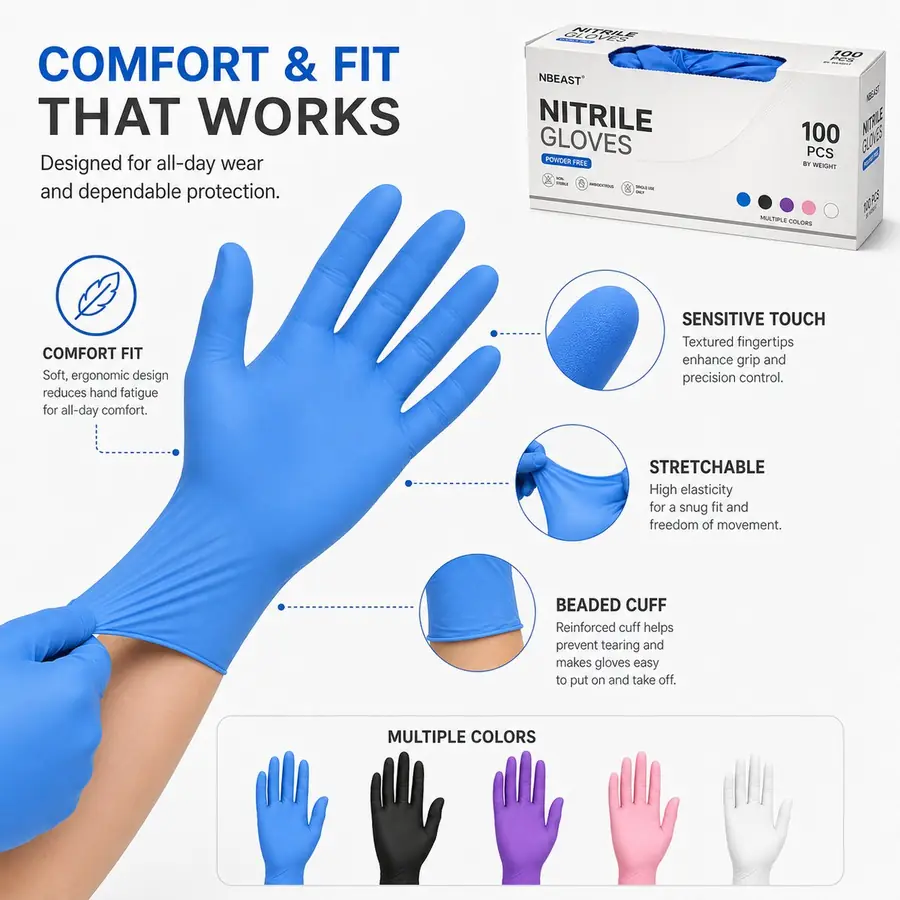
Are Nitrile Gloves the Same as Latex?
No. Nitrile gloves and latex gloves are not the same. Nitrile gloves are made from synthetic rubber and do not contain natural rubber latex. Latex gloves are made from natural rubber latex. The two materials differ in allergy risk, fit, puncture resistance, chemical resistance, common uses and price.
For importers, distributors, cleaning companies, beauty suppliers and food-service buyers, the right choice depends on the task, wearer needs, destination-market requirements and exact glove specification.
What Are Nitrile Gloves?
Nitrile gloves are made from synthetic rubber. They are latex-free and are widely used in cleaning, food handling, healthcare-related environments, tattoo work, beauty salons, laboratories, and industrial applications.
Nitrile gloves are popular because they usually provide good puncture resistance, chemical resistance, and durability.
They are often chosen when users need stronger protection.
What Are Latex Gloves?
Latex gloves are made from natural rubber latex. They are known for comfort, flexibility, and good fit. Many users like latex gloves because they feel soft and elastic.
However, latex can cause allergy concerns for some users. In markets where latex allergy is a major issue, buyers may prefer nitrile gloves.
Nitrile vs Latex Gloves: Quick Comparison
| Factor | Nitrile gloves | Latex gloves |
|---|---|---|
| Material | Synthetic rubber | Natural rubber latex |
| Natural latex | Latex-free | Contains natural rubber latex |
| Allergy consideration | Avoids natural latex protein exposure | May cause reactions in latex-sensitive users |
| Fit and elasticity | Good fit; varies by formulation and thickness | Often valued for softness and elasticity |
| Puncture resistance | Generally strong for its thickness | Good, but depends on the exact specification |
| Chemical and oil resistance | Often preferred for many cleaning, oil and industrial tasks | Suitability depends on the chemical and exposure time |
| Common applications | Cleaning, food handling, beauty, tattoo, automotive, examination and industrial work | Examination, cleaning, beauty and general protection where latex is acceptable |
| Price | Depends on weight, grade, formulation and quantity | Depends on raw-material cost, grade and quantity |
These are general purchasing comparisons. Always review the exact product data, intended use and destination-market requirements before ordering.
Which One Should You Choose?
Choose nitrile gloves if your customers care about:
- Latex-free use
- Better puncture resistance
- Cleaning or industrial applications
- Beauty, tattoo, or automotive work
- More professional market positioning
Choose latex gloves if your customers care about:
- Soft fit
- High elasticity
- Comfortable hand feel
- Lower cost in some applications
- General protection where latex allergy is not a concern
Are Latex Gloves Bad?
No. Latex gloves are not bad. They are still useful in many applications. The issue is not whether latex is good or bad. The issue is whether latex is suitable for your target users.
If your market has allergy concerns, nitrile is safer. If your customers prefer comfort and elasticity, latex may still be a good option.
EASTGLOVES Recommendation
For distributors, we often suggest carrying more than one glove material. Nitrile gloves can serve professional and higher-protection customers. Latex gloves can serve customers who prefer comfort and flexibility. Vinyl or TPE gloves can serve low-cost food service customers.
A complete product range helps you sell to more customer groups.
FAQ
Are nitrile gloves latex-free?
Yes. Nitrile gloves are synthetic and latex-free.
Are latex gloves cheaper than nitrile gloves?
Sometimes, but the price depends on raw materials, thickness, and order quantity.
Which glove is better for cleaning?
Nitrile gloves are usually better for cleaning because they offer stronger resistance and durability.
Which glove is more comfortable?
Latex gloves are known for comfort and elasticity, but modern nitrile gloves can also be comfortable.
Need help choosing between nitrile and latex gloves?
Contact EASTGLOVES with your application, target price, and order quantity.
Practical selection questions from glove users and buyers
Is “Food Safe” Enough to Choose a Glove?
No. For nitrile and latex comparison, begin with latex sensitivity, fit, elasticity and required documents; then verify the destination-market claim for the exact SKU. A short service task may need a different glove from long food-processing work.
When is vinyl or TPE more economical than nitrile?
Vinyl and TPE can suit short, low-risk tasks with frequent changes. Nitrile is usually chosen when fit, durability or longer wear matters. Cost the nitrile and latex comparison option using actual changes, rejected gloves and task completion—not the box price alone.
What should a workplace trial record?
For nitrile-versus-latex trials, record wearer size, task time, grip, tears, sweating and why each glove was changed. Run the approved nitrile and latex comparison sample in the real dry, wet or oily task before committing the full account.
How should allergy claims be handled?
In nitrile-versus-latex trials, identify latex as a natural-rubber product and keep nitrile, vinyl and TPE descriptions tied to their actual materials. Review formulation and skin-sensitivity information for the selected nitrile and latex comparison product instead of making a universal allergy claim.