Nitrile Glove Thickness Guide: How to Choose Between 3, 4, 5 and 8 Mil
A buyer guide to nitrile glove thickness: what a mil measures, how mil relates to glove weight in grams, and how to choose 3, 4, 5 or 8 mil for food service, cleaning, automotive and industrial work — plus how to verify the grade on arrival.
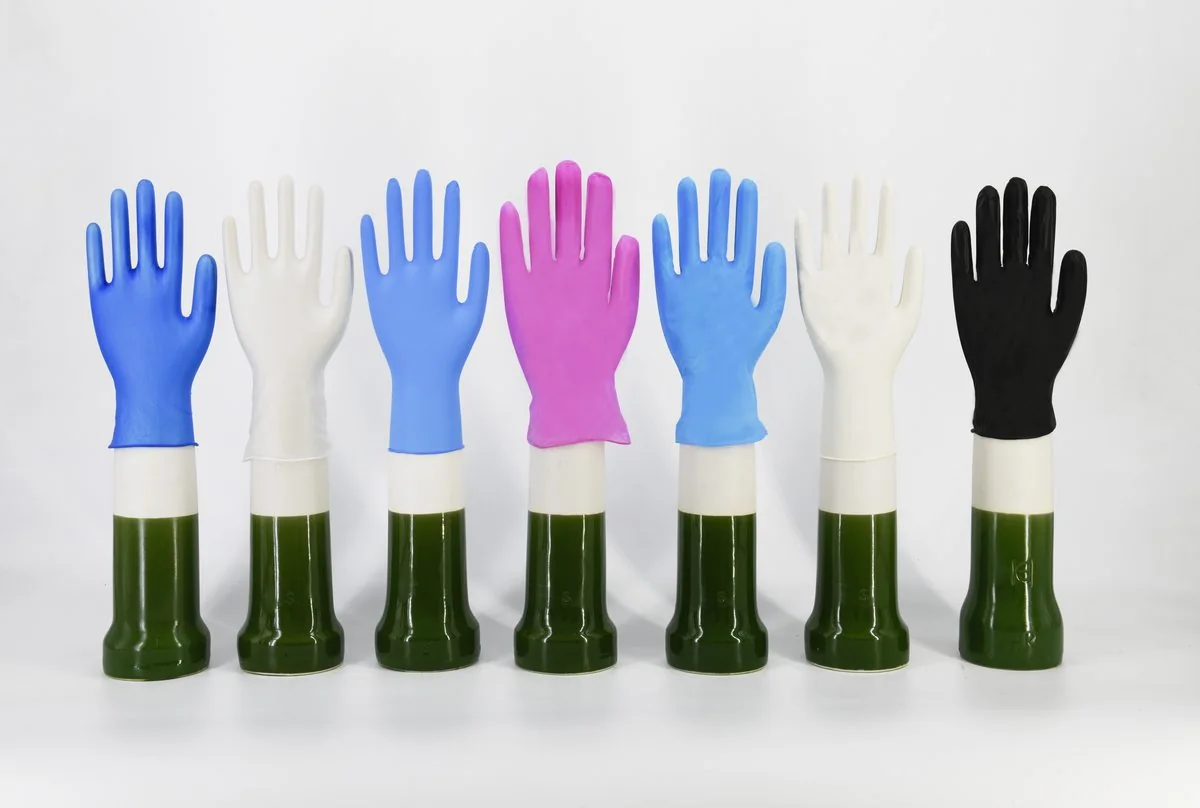
Nitrile glove thickness is quoted in mil — 3 mil, 4 mil, 5 mil, 8 mil — and it is the fastest way to match a glove to a task: thin for fast-changing food work, mid-weight for general service and cleaning, heavy and textured for automotive and industrial jobs. But a mil figure only helps if you know where it was measured and what it does not tell you, because thickness and glove weight are related, not interchangeable. This guide works through what a mil is, how it connects to the gram weights buyers verify on arrival (about 3.0 g for M, 3.5 g for L and 4.0 g for XL on the standard EASTGLOVES nitrile line), and how to choose and check each grade before a 1,000-carton order.
1. What a mil is — and why the same number can describe different gloves
One mil is one thousandth of an inch, about 0.0254 mm. When a supplier quotes "5 mil nitrile gloves", they are quoting film thickness — but glove film is not the same thickness everywhere. The fingertips are usually thickest, the palm is the reference point most specifications use, and the cuff is thinnest. Two gloves both sold as 5 mil can differ if one figure is a fingertip measurement and the other is a palm measurement, or if one is an average and the other a minimum.
That is why a mil claim on a sales page is a starting point, not a specification. On a specification sheet, look for the measurement point (palm is the practical reference), whether the figure is a minimum or an average, and the tolerance. If the sheet just says "5 mil" with no point or tolerance, ask. The same caution applies in reverse: a glove that measures honestly at the palm may look thin at the cuff, which is normal and not a defect.
2. Mil and grams: two numbers for the same glove
Buyers often ask whether they should specify mil or grams. The honest answer is that the two measure different things, and a good specification carries both.
Mil measures thickness at a point. It predicts puncture resistance, chemical splash hold-out and how the glove feels on the hand at that point. Grams measure the whole glove. Weight is thickness multiplied by surface area and compound density — which is why an XL glove weighs more than an M glove at exactly the same mil, and why a heavier compound can weigh more at the same thickness.
The practical consequence: grams are far easier for a buyer to verify than mil. Any distributor can weigh ten sampled gloves on a 0.01 g scale and compare the average with the agreed weight for that size; verifying mil needs a micrometer, a defined measurement point and care not to compress the film. Our glove weight check guide sets out the arrival routine in detail. As an anchor, the standard EASTGLOVES nitrile 100-piece line runs about 3.0 g (M), 3.5 g (L) and 4.0 g (XL) per glove. When you compare a mil quote from one supplier against a gram quote from another, convert cautiously and confirm per size — a single "average glove weight" without a size is not a specification. Our 3.5g vs 4g vs 5g comparison page shows how the weight grades line up for ordering.
3. The selection table: 3, 4, 5 and 8 mil by task
| Grade | Feel and durability | Typical buyer uses | Watch-outs |
|---|---|---|---|
| 3 mil | Lightest film, best fingertip feel, changed often | Food handling and food service with frequent changes, light assembly, general hygiene tasks | Shortest wear per glove; not for rough or oily work |
| 4 mil | The general-purpose grade; balance of feel and strength | Food service, cleaning and janitorial work, hospitality, light industrial tasks | Still a light glove for sharp or abrasive work |
| 5 mil | Noticeably sturdier, longer wear per glove | Janitorial contracts, industrial cleaning, food processing support tasks, longer shifts | Slightly less fine feel than 3–4 mil |
| 8 mil (diamond texture) | Heavy film with raised diamond grip; built for oily, rough work | Automotive workshops, machinery and maintenance, industrial distributors | Over-specified for food changing routines; costs more per glove |
Two patterns sit behind the table. First, thicker is not automatically better: a food-service buyer who changes gloves every few minutes gets more value from a lighter glove changed on time than from an 8 mil glove worn too long. Second, texture is part of the grade at the heavy end — the 8 mil line is ordered as a diamond-textured glove, because at workshop thicknesses the grip pattern matters as much as the film. The dedicated 8 mil diamond gloves page covers that product in detail.
4. Choosing by scenario
Food processing and food service. Most buyers land on 3–4 mil. Change frequency is high, feel matters for handling, and the glove is a hygiene consumable rather than protective equipment. Blue is the usual colour so any torn fragment is visible against food. If the same account also runs a cleaning crew, split the order: lighter gloves for the line, 5 mil for the crew, rather than one compromise grade for both.
Cleaning and janitorial contracts. 4–5 mil is the working range. Crews wear gloves longer per task, handle detergents and rough surfaces, and notice tearing more than fingertip feel. Distributors supplying contract cleaners usually standardise on one grade per contract so reordering stays simple.
Automotive and industrial. Start at 5 mil for general bay and warehouse work and move to 8 mil diamond texture where hands meet oil, grease and metal edges all day. The automotive gloves guide works through workshop selection in full. Industrial buyers who already order from the industrial range can cross-check the industrial gloves guide for the distributor view.
5. How to check thickness and weight when the goods arrive
Write the verification method into the order, then run it the same way on samples and on the bulk delivery:
- Weigh first. Sample at least ten gloves per size from different boxes and cartons, weigh one at a time on a 0.01 g scale, and compare the per-size average with the agreed gram weight. Weight drift is the earliest sign that the film has changed.
- Measure at the palm. If you check mil directly, use a micrometer with light, consistent pressure at the palm, and average several gloves. Note the point and pressure you used — a reading taken at the fingertip or with the film compressed is not comparable with the specification.
- Sample-inspect to the agreed AQL. Set the inspection level on the order — EASTGLOVES works to AQL 1.5 to 4.0 depending on use and customer requirement — and keep the sampling records with the batch documents.
- Keep a sealed reference box from the approved sample batch, so any later discussion compares the delivery against the sample, not against memory.
File the paperwork with the physical checks: the specification sheet, the sampling record and the document set for the exact SKU — CE certification, ISO 13485 quality management and, for Saudi buyers, Saudi MDMA approval — kept together, so any later question about a batch can be traced to the delivery that was actually inspected rather than to a catalogue claim.
6. Ordering notes: keep the specification identical across sizes
The most common thickness dispute is not about the number — it is about the number quietly changing between the sample and the bulk, or between sizes in the same order. Avoid it by putting the full specification on the order confirmation: mil at the palm with tolerance, gram weight per size, sizes and size mix, colour, and packing at 100 pieces per box and 10 boxes per carton. Bulk orders start at 1,000 cartons, quoted FOB Ningbo after specification and quantity are confirmed, with a typical lead time of about 30 days. Samples are paid and sample freight is paid, with sample costs deductible or refundable after a bulk order is placed. Quotations are prepared per inquiry; this guide carries no price, because the right grade depends on the task the glove has to survive.
Procurement FAQ
Is a thicker nitrile glove always better?
No. Thicker film lasts longer and resists punctures better, but it reduces fingertip feel and costs more per glove. Food work with frequent changes is usually better served by 3–4 mil changed on time than by an 8 mil glove worn too long. Match the grade to the task.
What thickness should I choose for food handling?
Most food-service and food-processing buyers choose 3–4 mil for line and service work, where gloves are changed frequently, and step up to 5 mil for cleaning and support tasks in the same facility. Confirm the weight per size on the specification sheet as well as the mil figure.
What thickness do mechanics usually need?
Workshops typically start at 5 mil for general work and use 8 mil diamond-textured nitrile for oily, rough tasks, where the raised grip and heavier film hold up through a job. Black is the usual colour because it hides grease.
How do mil and grams relate?
Mil is film thickness at a point; grams are the weight of the whole glove. At the same mil, a larger size weighs more because there is more film, and compound density also plays a part. Specify both — mil at the palm and grams per size — so the delivery can be verified by weighing.
How can I check the thickness when the order arrives?
Weigh ten sampled gloves per size against the agreed gram weight first — it is the check any buyer can run. If you measure mil, use a micrometer at the palm with consistent light pressure and average several gloves, then sample-inspect to the AQL level written on your order.
What to send with your first inquiry
Send the material (nitrile), the mil grade or the gram weight you are targeting — with the size it refers to — plus the task the gloves are for, sizes and size mix, colours, quantity in cartons and destination port. If you are replacing a glove your customers already use, name its grade as well: "currently 4 mil, moving to 5 mil for the cleaning contract" lets the supplier quote the right film the first time. With those details, EASTGLOVES can confirm the grade, documents and the FOB Ningbo quotation basis without guessing.