Black vs Blue Nitrile Gloves: Which Is Right for Your Industry?
Nitrile glove color is not just about appearance. Different industries use color for contamination visibility, branding, professional image and task separation.
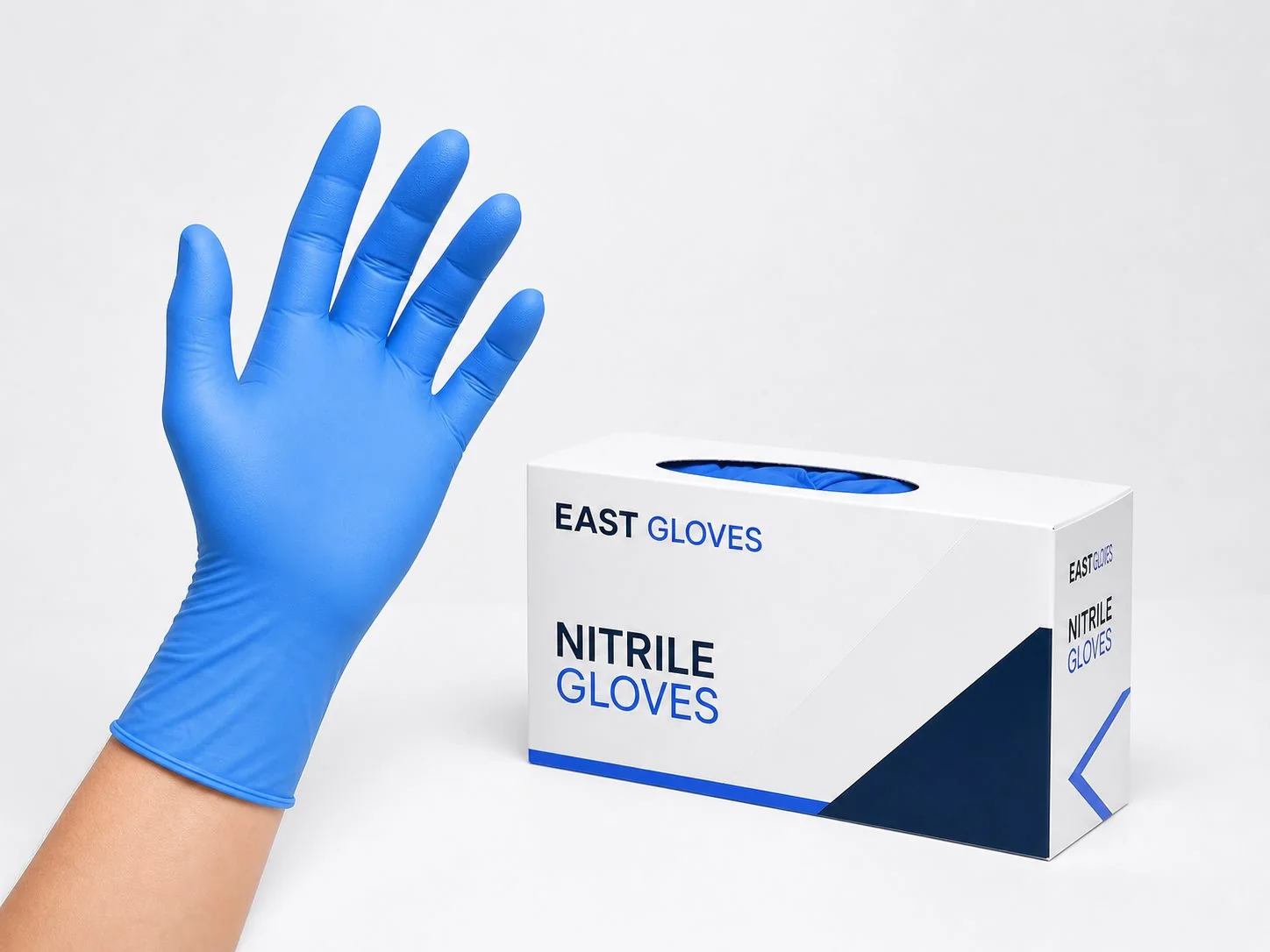
Blue Nitrile Gloves: The Industry Standard
Blue is widely used in food processing, janitorial cleaning, dental, laboratory and general clinical settings because it is easy to spot.
Black Nitrile Gloves: Professional and Industrial
Black nitrile gloves are popular in automotive, tattooing, barbering and high-end cleaning services because they hide grease, ink and dye.
White Nitrile Gloves
White nitrile gloves are common in pharmaceutical manufacturing, clean-room environments, beauty and nail salons where contamination visibility matters.
Purple and Pink Nitrile Gloves
Purple and pink nitrile gloves are popular in beauty salons, nail studios, spas and consumer retail packaging.
Diamond Texture Nitrile Gloves
Diamond texture nitrile gloves provide enhanced grip on wet or oily surfaces for automotive, mechanical and industrial work.
Quick Comparison Table
| Color | Primary Use | Key Markets |
|---|---|---|
| Blue | Food, medical, general use | Food service, healthcare, laboratory |
| Black | Automotive, tattooing, barbering, premium cleaning | Automotive, beauty, professional services |
| White | Pharma, clean-room, beauty | Manufacturing, nail salon, spa |
| Purple / Pink | Beauty salon, retail | Nail studio, spa, consumer retail |
| Orange Diamond | Industrial, automotive | Mechanic, maintenance, construction |
Choosing by Use Case: Which Colour Fits the Job
Colour choice is usually decided by the work, not by taste. The table below is a practical starting point: it matches each common use case to the colour most often chosen for it, and the reason behind the choice. Treat it as guidance for narrowing the options, and confirm the final colour against a sample before placing a bulk order.
| Use case | Colour most often chosen | Why it fits |
|---|---|---|
| Tattoo | Black | Hides ink and pigment through a session and reads as professional in the studio; tears and ink spots are less visible to the client. |
| Automotive and mechanical work | Black | Hides grease, oil and grime; a dark glove looks presentable for longer during dirty work. |
| Food handling | Blue | Blue stands out against most food, so a torn piece is easy to spot; blue is the colour most food operations already use, so it fits existing hygiene practice. |
| Cleaning and janitorial | Blue or black | Blue suits general cleaning where spotting contamination matters; black suits premium cleaning services where appearance in front of clients matters. |
| Beauty, nails and salon work | Black, purple or pink | Black reads as premium and hides dye and polish; purple and pink are chosen for salon branding and a softer look for clients. |
Two habits make the table work in practice. First, many buyers standardise on one colour per task or per team, so that the right glove is always the one within reach — a workshop keeps black, a food line keeps blue, and nobody has to decide at the start of a shift. Second, colour is often used to separate tasks: one colour for food contact and another for cleaning, so a glove used for one job is never mistaken for a glove meant for another. If you run more than one kind of work under one roof, ask yourself whether two colours would prevent more mistakes than one colour would save in ordering.
When Black Hides Problems — and When Blue Shows Them
Black and blue hide and reveal opposite things, and that is the real trade-off between them. Black hides ink, grease, dye and dark grime, which is why tattoo artists, mechanics and barbers prefer it: the glove keeps looking clean while the work is dirty. But the same darkness hides light-coloured contamination — flour dust, white powder, pale cleaning residue and light-coloured liquids are hard to see on a black glove, and a small tear in a black glove is harder to spot than the same tear in a blue one. A black glove can also hide a pinhole leak that would be obvious on a lighter colour, so workers who rely on a visual check before starting a task should look more carefully, not less.
Blue shows the opposite side of the same coin. A tear, a puncture or a splash of dark liquid is easy to see on blue, which is why food operations and cleaning teams favour it: a problem is visible the moment it happens, and the glove can be changed before it becomes a contamination incident. Blue also shows ink, grease and dye plainly, so a blue glove that has done mechanical work looks dirty quickly — which is a disadvantage in front of a client, and an advantage when the point is to notice that the glove needs changing. Light-coloured powders and pale residues are also easier to see on blue than on black, though a white powder on a pale blue glove is still easy to miss, and the check should never rest on colour alone.
The practical conclusion is simple: choose the colour whose weakness you can live with, not the one whose strength you like most. If your work is dirty and your clients are watching, black is usually the better compromise. If spotting tears, splashes and contamination quickly matters more than appearance, blue is usually the better compromise. And whichever colour you choose, build the habit that matches it — check a black glove closely before use, and change a blue glove the moment it shows a mark.
Buyer Checklist: Colour, Consistency and Packing
Colour problems in a bulk order are rarely about the colour itself. They are about consistency: one size a shade darker than the rest, one carton from a different batch, a box that does not match the carton. Work through this checklist before confirming the order:
- Colour consistency across sizes. Ask for a sample box in every size you are ordering, not just one size. Colour can vary slightly between production runs, and a size run produced separately can arrive a shade off from the rest. Check the sample boxes side by side in daylight, not one at a time.
- Colour consistency across the order. Confirm that the full order is produced to the same colour standard, and ask for the lot marking to be recorded on the packing list so any later question can be traced to its batch.
- Box and carton quantities. Standard packing is 100 gloves per box and 10 boxes per carton, so one carton holds 1,000 gloves. Confirm the count in writing before production — a box count that differs from the standard changes the glove count for the whole order.
- Private-label colour options. Black, blue, white, purple and pink are the standard nitrile colours, and private-label boxes can be printed in your own design. Confirm the box design and the glove colour together: the box should state the colour it contains, and the colour on the box should match the gloves inside.
- Weight grade with its size. Colour is not a weight. Confirm the weight grade with its reference size for the colour you order — nitrile runs S 2.5 g, M 3.0 g, L 3.5 g and XL 4.0 g — because a colour change is not a reason for the weight to change, and a quotation that omits the weight is not a specification.
If you are still deciding, start with the nitrile gloves product page and the black nitrile gloves wholesale page and the blue nitrile gloves wholesale page, or read our black nitrile gloves for tattoo shops notes to see how one trade settles the colour question in practice. If you are still weighing materials rather than colours, read how nitrile differs from latex — the two are not the same glove.
Colour FAQ
Frequently asked questions
Can I order black in one size and blue in another?
Yes. Colour and size are ordered independently, so you can split an order by colour and size to match different teams or tasks. Confirm the colour and size split for every SKU in writing before production, so cartons can be marked, counted and loaded in blocks that match your packing list.
Will the colour look the same in every carton?
Colour is produced to a standard, but a slight variation between production runs is possible. That is why you should check a sample box from each size and each colour before confirming a bulk order, and ask for the lot marking to be recorded on the packing list so any later question can be traced to its batch.
Need help choosing the right glove?
Send Amy your product type, size, color, quantity, destination country and OEM packaging requirements. Contact Amy on WhatsApp for a prompt response.