Powder-Free Gloves vs Powdered Gloves
Powdered gloves may feel easier to don, but powder can leave residue and may be restricted or unsuitable in regulated and contamination-sensitive settings. For most professional purchasing programs, the decision should begin with destination rules and workplace risk—not habit or unit price.
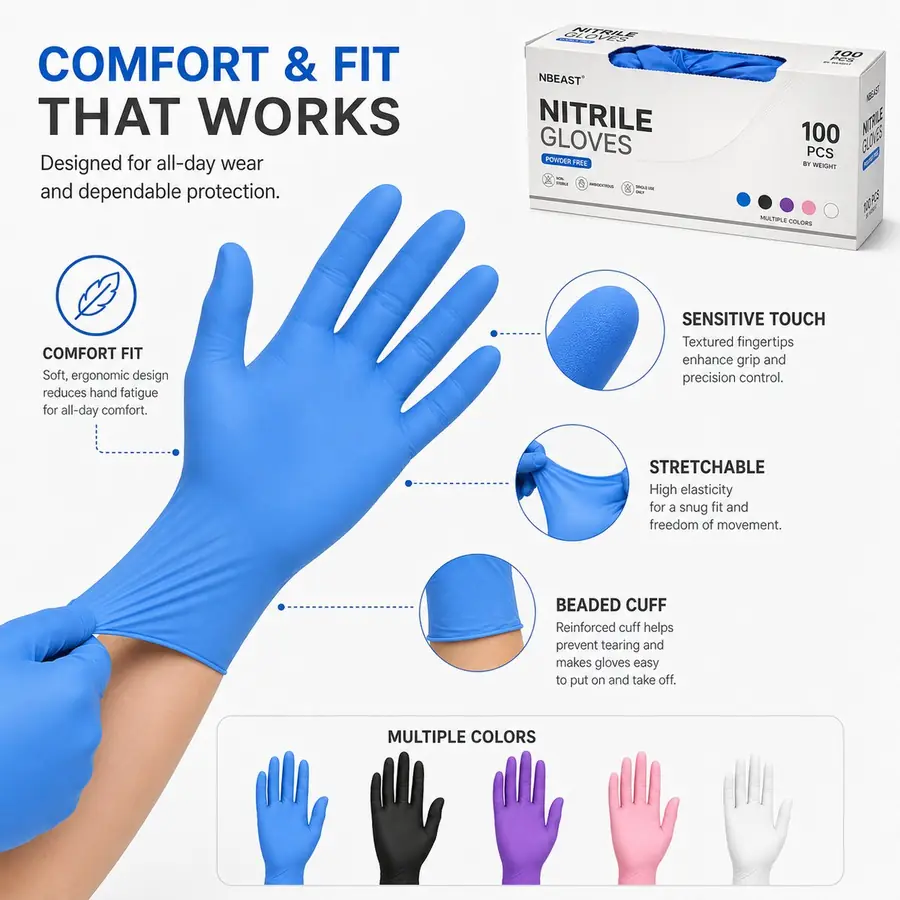
Quick Answer for Buyers
Powder-free gloves are the practical default for most current food, healthcare, beauty, cleaning and industrial programs. Powder can make donning easier, but it may transfer to products and surfaces, create residue and contribute to user complaints. A powder-free claim still does not establish medical, food-contact or chemical suitability; those points must be checked separately for the exact glove.
Why Buyers Ask About Powder
In workplace discussions on Reddit, cooks and other frequent glove users repeatedly mention hand irritation, sweat, residue and difficulty changing gloves with damp hands. These comments are useful because they reveal what creates complaints at the workstation. They are not a substitute for a product assessment: irritation may also involve glove material, accelerators, soaps, frequent handwashing, fit or prolonged occlusion.
Powdered Gloves
Powder is applied to help a glove slide onto the hand. It can be attractive where rapid donning is the only concern, but buyers must consider where the powder goes after donning. It may reach food, equipment, painted surfaces, electronics or a customer’s skin. Medical buyers also need to recognize that the U.S. FDA bans powdered surgeon’s gloves, powdered patient-examination gloves and absorbable powder used to lubricate surgical gloves.
Powder-Free Gloves
Powder-free gloves avoid loose donning powder and are easier to position across multiple professional markets. Their donning performance depends on the inner treatment, formulation, finish, storage conditions and correct size. If workers report tearing while putting gloves on, do not assume powder is the only solution. Check hand dryness, cuff opening, glove width, thickness, storage temperature and whether the selected size is too small.
What to Compare in a Sample Trial
- Donning with normally dry and slightly damp hands
- Residue left on hands, clothing and work surfaces
- Cuff tearing during rapid changes
- Fit across the actual size range
- Odor and skin-comfort feedback after a full shift
- Required documents for the intended use and destination
Buyer Recommendation
Specify “powder-free” in the purchase specification and box artwork when that is the requirement. Then verify the exact material, size range, weight or thickness, intended use, AQL where applicable and packaging. Do not describe a glove as hypoallergenic or suitable for every user without supporting evidence. For employees with persistent skin symptoms, workplace health procedures and professional medical advice are more appropriate than changing glove marketing language.
Receiving Inspection
At receiving, compare the box claim with the purchase specification and retained sample. Open cartons from more than one position, check for visible powder or residue, count pieces and inspect cuffs for blocking or tearing. Store gloves away from excessive heat, sunlight and ozone sources according to the manufacturer’s instructions. If a user complaint occurs, record the lot, size, task, wear time and other products used on the hands; a traceable complaint is more useful than a general statement that one glove type causes irritation.
Practical selection questions from glove users and buyers
Is “food safe” enough to choose a glove?
No. For powder-free and powdered gloves, begin with destination rules, residue concerns and workplace controls; then verify the destination-market claim for the exact SKU. A short service task may need a different glove from long food-processing work.
When is vinyl or TPE more economical than nitrile?
Vinyl and TPE can suit short, low-risk tasks with frequent changes. Nitrile is usually chosen when fit, durability or longer wear matters. Cost the powder-free and powdered gloves option using actual changes, rejected gloves and task completion—not the box price alone.
What should a workplace trial record?
For powder-status trials, record wearer size, task time, grip, tears, sweating and why each glove was changed. Run the approved powder-free and powdered gloves sample in the real dry, wet or oily task before committing the full account.
How should allergy claims be handled?
In powder-status trials, identify latex as a natural-rubber product and keep nitrile, vinyl and TPE descriptions tied to their actual materials. Review formulation and skin-sensitivity information for the selected powder-free and powdered gloves product instead of making a universal allergy claim.
Need a sourcing quotation?
Contact Amy with your product list, target quantity, packing needs and destination country. Powder-free and powdered gloves should be evaluated against the intended use, user sensitivity and the regulations of the destination market.