Disposable Gloves for Cleaning Companies: Bulk Buying Guide
How cleaning companies and distributors choose nitrile, vinyl and disposable sleeves for bulk cleaning supply.
Match the Glove to the Cleaning Task
A cleaning company may handle dusting, washrooms, detergents, waste, food areas, glass, machinery and outdoor work. These tasks do not have identical glove requirements. Disposable gloves can support hygiene and light splash control, but they should not be presented as suitable for every chemical or prolonged immersion.
What Professional Users Complain About
Reddit discussions among cleaners and other glove users frequently mention tearing while donning, sweat, poor sizing and dark gloves being chosen mainly for appearance. These comments point to useful operational tests. Color can support a professional image or zone coding, but material, fit, thickness, texture and verified chemical data determine task suitability.
Nitrile, Vinyl and Reusable Gloves
Nitrile is often preferred for fit and durability in varied cleaning tasks. Vinyl may suit brief, low-demand work with frequent changes. For prolonged contact, aggressive chemicals, abrasion or immersion, a suitable reusable chemical-protective glove may be required instead of a thin disposable glove. Review the safety data and glove manufacturer guidance for the exact chemical, concentration and exposure time.
Test Cost Per Shift
Compare more than case price. Issue the correct sizes and record gloves used per employee, donning failures, tears during work and time lost changing gloves. A more durable glove can be economical if it reduces waste, while an unnecessarily heavy glove may increase fatigue and cost.
Fit and Texture
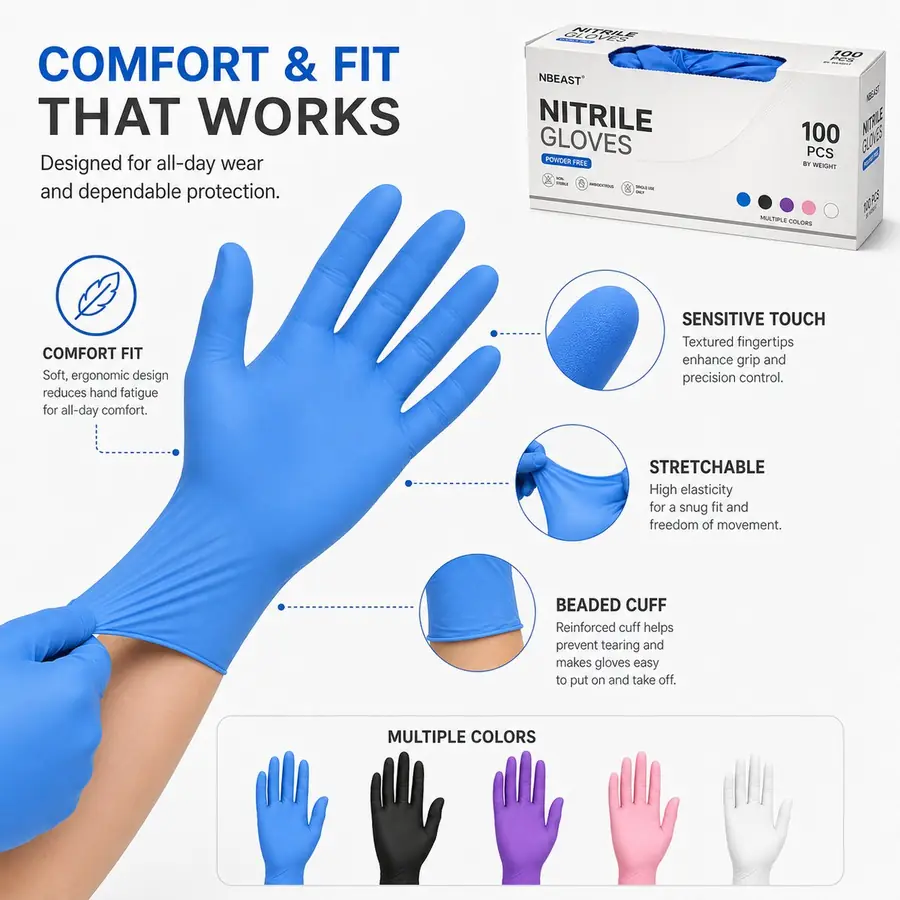
A glove that is too small may tear during donning; one that is too large can reduce control. Fingertip texture may be adequate for routine wiping and tools. A more aggressive texture can help in wet or oily work, but texture alone does not establish chemical protection.
Color Coding
Use colors consistently if teams separate washrooms, kitchens, guest areas or industrial zones. Document the system and train employees. Do not claim that black, blue or another color is inherently safer. Check color consistency if appearance is part of the customer’s brand standard.
Bulk Buyer Checklist
- Tasks and chemicals used
- Material, sizes, thickness or weight and texture
- Expected change frequency
- Pieces per box and cases per order
- Required documents for destination and use
- Private-label box, barcode and carton marks
- Samples tested by actual cleaners
Order Planning
Use workforce size and observed consumption to estimate monthly demand, then add a controlled safety stock. Track complaints and use by size after delivery so the repeat order reflects real operations.
Complaint and Safety Records
Ask supervisors to record the glove lot, size, cleaning product, dilution, contact time and type of failure when a problem occurs. This helps distinguish a puncture, donning tear, fit problem and material incompatibility. Safety decisions should use the chemical manufacturer’s information and an appropriate workplace assessment, not social-media recommendations. If a disposable glove is outside its intended exposure, select a suitable alternative rather than compensating with color or extra layers.
Performance questions buyers ask after real-world glove use
Does a higher gram weight guarantee better protection?
No. Weight is useful for comparing like-for-like gloves, but palm and fingertip thickness, formulation, tensile performance, texture and quality consistency also matter. Request the full specification and test the exact sample in the intended task.
When is raised diamond texture useful?
Raised texture can improve control in wet, oily or greasy work, but it also changes dexterity, material use and box count. Test grip with the actual tools and fluids instead of choosing texture only from a product photo.
Why do users tear gloves while donning?
Common causes include an undersized glove, pulling from the fingertips, sharp nails, damaged cuffs or inconsistent material. A wearer trial should record where tears occur and whether changing size or donning technique solves the problem.
What belongs in an industrial glove trial?
Record task, chemicals or oils present, wear time, grip, punctures, tears, cuff roll and change frequency. Disposable gloves are not suitable for every chemical or mechanical hazard, so review compatibility and workplace risk requirements separately.